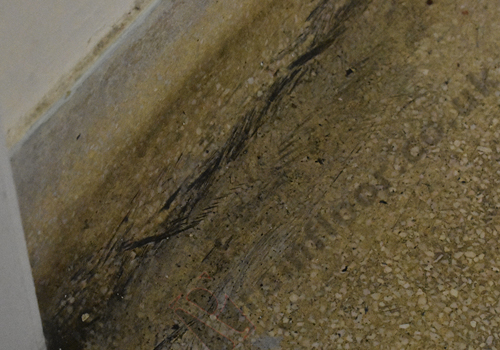
Terrazzo Floors

Premfloor have extensive knowledge in terrazzo installation, refurbishment and repairs. Problems such as failing joints, grout damage, scratches and sealer issues can all be resolved with one phone call.

Terrazzo Flooring, Maintenance and Repair

We have terrazzo contractor experience in airport floor polishing, shopping centre terrazzo floors, shopping centres marble repairs and limestone office flooring.

Terrazzo Floor

Terrazzo is probably the best value floor on the market, and regular flooring maintenance will keep it pristine.

Which Terrazzo Flooring Contractor to use?

Many Terrazzo floor owners make the mistake of entrusting repair and refurbishment to tiling contractors - big mistake! Most tiling contractors do not understand Terrazzo, and many Terrazzo companies only undertake refurbishment when new tiling work is scarce, mainly in the Winter time.

Premier have teams trained in refurbishment only, using specially developed equipment aimed at slashing contract times by up to 75%.


Specialist Joint Cutting Plant

For smaller contracts we generally revert to traditional techniques ourselves, but having got used to working clean our tradesmen insist on immaculate dust extraction on all equipment, and that's what they get!

Hand laid systems

(known as in-situ)

Traditional terrazzo consists of a blend of stone (Aggregate) and white cement, usually with a pigment added. Once mixed with water, the material can be hand-laid, or put into a mould to form a tile. At this point the material is simply known as screed, and it is the removal of a small amount of the surface which converts it into a Terrazzo by revealing the blend of aggregates within the mix. The hand laying of traditional terrazzo is a highly skilled art form, but over the last ten years there has been a shift away from the use of cement as the binder in favour of resins, mainly epoxies.

Cement-based terrazzo was laid with a high cement content and was prone to cracking. The skill levels needed to lay the terrazzo successfully involves many years of practise and tuition, unlike the skill levels needed to install a resin based terrazzo. Coupled with the benefits afforded by the properties of modern resins, prices for the installation and skill levels required have both reduced substantially.

Terrazzo can now be used in a harsh chemical environment, subject to careful selection of the aggregate. Many forms of acid, which would attack the cement binder in traditional, will not affect the resin binder providing due consideration was given to the selection of the most appropriate resin initially.

About Terrazzo Tiles

Although there are many types of terrazzo, the single most popular one is in tile form.

These are generally about 28mm thick, and consist of two distinct sections monolithically bonded together. The base of the tile is formed from normal sand and cement, which is cheaper than the terrazzo mix. The wearing, and more expensive terrazzo finish is only used in the top half of the tile.

The tiles are cast in moulds and excess water is pressed out of them. As with all cement products, the tiles should be encouraged to dry out gradually so that they develop strength. Some manufacturers leave the tiles to cure for a week or so in steam rooms, which really promotes all the best qualities of the cement.

Tile laying

Tiles are normally laid into a semi-dry sand and cement screed, and then bedded into a cement slurry which bonds the tile to the screed. The act of washing the tiles with clean water at the end of each day shift cleans sand and cement from the joints, and serves to wet the screed out further, thus strengthening it.

The concrete slab onto which the sand and cement screed is to be laid should be damped down before the screed is applied.

Once the screed has cured (24 hours normally), a mixture of coloured cement and water is tipped onto the tiles and pushed across the tile surface filling all the joints, and sinking into the sand-cement screed thus leaving the joints low. It is vital therefore to continually push the grout around and keep the joints topped up. An excess of 1 or 2 mm thickness of grout is left on the tile surface. The subsequent grinding removes this excess grout whilst simultaneously eradicating any small lips between tiles to leave a flat floor. One common aspect on all terrazzo contracts is the grinding.

Grinding Cementitious Systems

Despite the advent of digital grinders which utilise diamonds, the initial grinding stages are invariably carried out with large Calor-Gas, or 3 phase powered grinders. Dry grinding, though hard on the machines, is considerably faster and cleaner than wet grinding, As a general guide, for normal supermarket-type finished, the first grind would be to use a 36 grit carborundum block, and the second and final finish utilises an 80 grit stone.

After an 80 grit finish, there will be a slight sheen to the floor. This is considerably enhanced by the application of a penetrating sealer which partially sinks into the tile surface and is buffed to a shine once the sealer is dry.

Floor edges, and inaccessible areas, are hand polished. The discs used should match those of the floor grinders to ensure minimum discrepancy between the two types of finish. Dry grinding can be carried out in almost completely dust-free manner thanks to special attachments for hand grinding machines. Diamond polishers can now be utilised to apply a distinct and highly reflective shine to the terrazzo, using special diamonds.

Polished Concrete

Since normal concrete consists of cement, stone, and sand, it too can be ground and polished to present a terrazzo finish. The act of grinding removes the weak layer from the suface of the concrete, (known as laitance), and reduces the likelihood of future dusting.

Once the concrete has been rough ground then highly polished, it is sealed and buffed to a high shine. This is a very enonomical way to achieve a terrazzo floor.

Grinding Resin Terrazzo

Coarse diamonds grind at a much higher rate than carborundum, and are used to remove 1 or 2 mm of the epoxy surface, revealing the aggregate. The coarse diamonds should be used until all patches are removed from the surface. This type of grinding will invariably introduce ridges and scratches into the floor which subsequent fine grinding will remove.

Most epoxy terrazzo required grouting to fill pin-holes. A special thin version of the resin is used for this, and great care should be used to ensure that the grout is forced into the pin holes.

After 24 hours, surplus grout is removed by light grinding. Dependent upon the specification a sealer may be applied after this stage.

Protective Equipment

PLEASE ALWAYS USE PERSONAL PROTECTION EQUIPMENT to ensure adequate protection at all stages.

Further information

Should you require further advice, ball park figures, or typical outputs please complete an e-mail enquiry.

Upgrading a badly pitted terrazzo tiled floor (basic specification)

Before you dig that floor up, consider whether or not it can be refurbished.

Upgrading old terrazzo normally consists of a combination of the following processes:-

  1. Replacing cracked and badly damaged tiles.
  2. Replacing old grout joints.
  3. Cleaning pitted surfaces.
  4. Replacing failed expansion joints.
  5. Grouting.
  6. Grinding.
  7. Polishing.
  8. Sealing.

Replacing cracked and badly damaged tiles

- A typical scenario
  1. Using a diamond tipped blade, cut around all demic tiles to at least the depth of the tile.
  2. Remove the tile and break out the screed.
  3. Clean and damp the concrete screed.
  4. Mix and apply a sand-cement screed onto which the new tile will be bedded.
  5. Apply a slurry to the screed and knock the tile into it.
  6. After a 24 hour period, run a diamond blade around the perimeter of the new tile to clean out the joints.
  7. Pour and trowel fast setting resin into the joints (could be done later.)
  8. Grind tiles to blend in levels with surrounding Terrazzo.

Replacing old grout in joints

  1. Use a diamond tipped angle grinder to cut at least 10mm down into the joint. Where long runs of grout are to be removed, consider using a trolley mounted mini floor saw. Wherever possible always use machinery dry, and fitted with dust suppression hoods.
  2. Flood the joint with a runny resin.
  3. After curing (normally around 10 minutes), top up the joints with a stiffer resin (care must be taken to ensure that ALL mixes are identical in colour).
  4. Grind to remove excess resin, polish and seal.

Replacing failed expansion joints

There are two common types of expansion joints used in terrazzo floors, Main expansion joints and mini expansion joints.

Typically main joints will absorb a considerable amount of movement, and are used quite sparingly in selected locations.

Mini expansion joints are used repeatedly to form bays in the terrazzo floor.

Replacing main joints

Consideration should be given as to why a joint needs replacing. It is possible that the initial spec did not predict or accommodate the movement which actually occurs in the terrazzo.

Expansion joint replacement consists of:-

  1. Joint isolation. Cut one tile width either side of the joint.
  2. Break out the tiles and screed.
  3. Remove old expansion joint.
  4. Clean the concrete floor
  5. Install the new joint in accordance with manufacturers instructions - typically bolted down and set into an epoxy screed.
  6. Replace the tiles
  7. Grout, grind and polish the tiles.
  8. Seal the tiles

Grouting

Cleaning pitted surfaces before grouting

One way to ensure the success of terrazzo refurbishment is to ensure that the holes in the tiles are properly cleaned out before being grouted. This process carried out by dustless shot-blasting, normally done after failing joints have been cut out also.

Once the terrazzo has been blasted, grouting of tile and joints can be done simultaneously.

A thin coat of surplus grout is left to cure on the surface ot the tiles. To ensure that the grout penetration into the joints is adequate, a runny resin is used as a first grout and topped up by a stiffer grout.

Grinding and polishing

Because the grout is normally good quality resin, carborundum blocks tend to clog up if used for it's removal. The heat created during dry grinding tends to soften the resin and jam up the grinding blocks.

Diamonds cannot "clog" up, and are invariably used to remove grout. Typically a 25/36 grit diamond is used initially. The specification for the diamond matrix should be agreed with the manufacturers of the grinding disc in advance.

Fine grinding can be taken up to 10,000 grit to give the floor a mirror finish The finer end of the grinding spectrum is known as "diamond polishing." This is normally carried out as a wet process, but generates little in the way of slurry since it is only applying a diamond shine to the terrazzo floor.

Sealing

There are literally hundreds of sealers on the market, which can successfully seal a terrazzo floor.

These are split into 2 main groups, penetrating and surface sealers. Surface sealers sink partially into the pores but a good percentage remains on the surface of the tile. A polyurethane or epoxy varnish would fit into this category. The abrasion and scratch resistance of these products should be considered before their use on tiles floors.

Penetrating sealers, the traditional material for terrazzo tiles, reacts with the calcium within the tile to produce a healthy shine when cleaned and buffed up. This sealer should be re-applied annually.

Food for thought

Repairing and replacing terrazzo should invariably be left to experienced contractors, especially when large areas are concerned.

With the technological advances in relation to vacuum extraction, there is no reason why refurbishment of terrazzo should be the dusty, dirty process it used to be.

Flooring Info
Terrazzo Flooring Grinding

Floor Polishing

Manchester Airport
Diamond Grinding
Anti Slip Shine

Floor Repair

Terrazzo Repair

Breahead Centre
Floor Rejuvination
Sparkling Shine

Marble Floor Travertine

Marble Flooring

The Centre:MK
Travertine Marble
Regrout and Repair

Limestone Flooring

Limestone Tile

Wembley Point
Replacing Carpet
Office Lobby Floor

Flooring Contractors